How Do You Fix Peeling Paint on a Bathroom Ceiling? A Repair Guide for UK Homes
Fix peeling paint on a bathroom ceiling in four moves: stop the moisture, scrape off every loose flake, prime the bare patches, then repaint with a bathroom paint. Skip the first move and the paint will usually peel again.
If you are asking how do you fix peeling paint on a bathroom ceiling, start by working out why it peeled. The repair only lasts if the cause is gone.
Read the peel before you pick up a scraper
What you see tells you what went wrong.
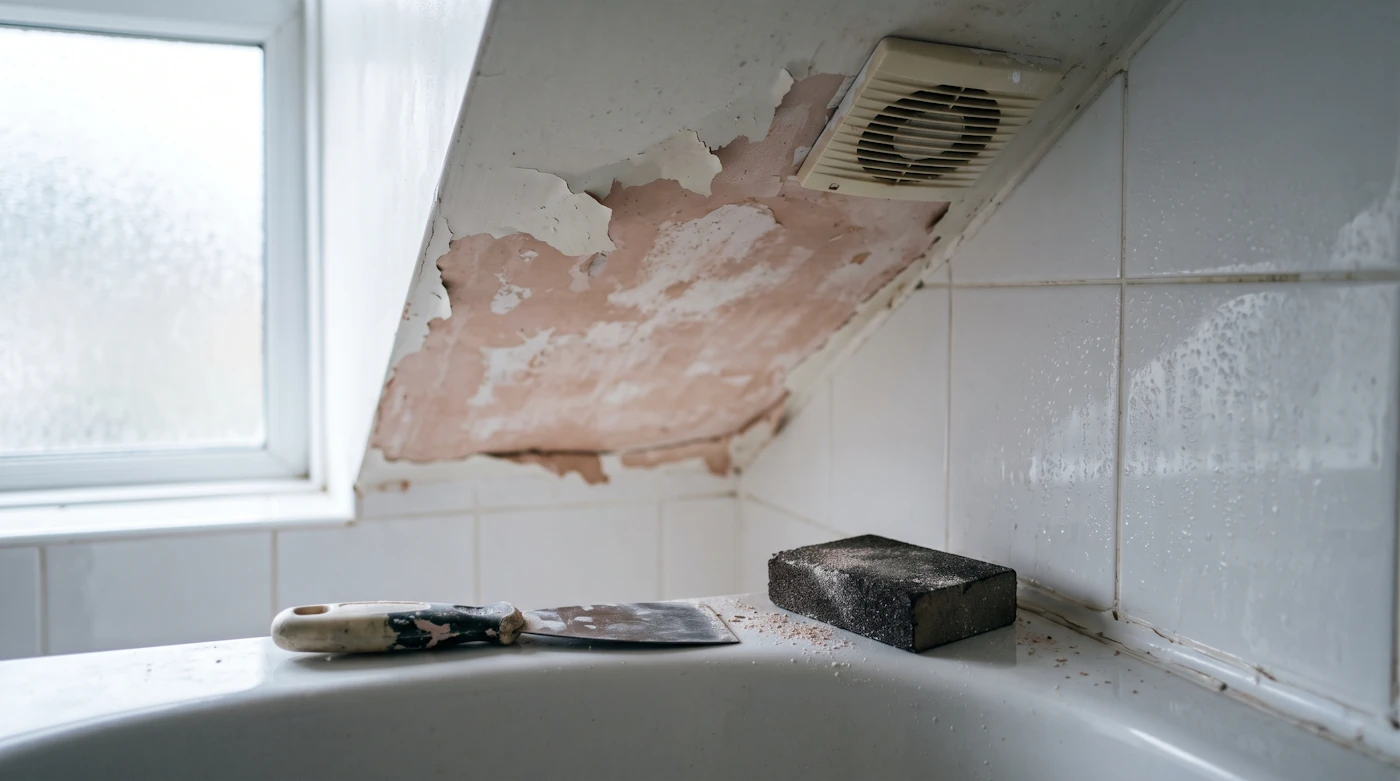
- Sheets of paint lifting from bare plaster, mostly above the bath or shower: steam and condensation, or paint applied over a dusty or greasy surface.
- A brown or yellow stain under the flaking: a leak from a pipe, bath or roof above. Fix the leak first and let the ceiling dry fully.
- Black or green speckles: mould. Treat it before you paint.
- Peeling along joints or edges: movement or cracking in the plaster or plasterboard.
Older home with a textured coating such as Artex? If it was built before 2000, do not sand or scrape it until it has been tested for asbestos.
The repair, in order
- Stop the moisture. Fix any leak, and run the extractor fan or open a window for 15 to 20 minutes after every bath or shower.
- Scrape off all loose paint with a flexible filling knife. If it lifts easily, it is not stuck. Wear a dust mask and eye protection when working overhead.
- Treat mould with a fungicidal wash, following the label, and let the ceiling dry.
- Wipe the surface clean and let it dry fully. Sand the ragged edges until they feel smooth, fill any gaps and cracks, then sand again.
- Seal bare plaster and filled patches with a primer suited to the surface. Use a stain block over any brown marks.
- Paint two thin coats of moisture-resistant bathroom paint, leaving the recoat time on the tin between coats.
- Keep showers short until the paint has hardened. The tin gives the time.
Allow two to three days for a small ceiling, mostly for drying. Larger damp areas take longer.
Mistakes that bring the peel back
Painting over loose flakes is the big one. A new coat holds only as well as the surface under it, so it lifts the old paint with it.
Standard matt emulsion is next. It soaks up steam, and a bathroom paint resists moisture better.
Rushing comes third. Paint over damp plaster traps water behind the film, and recoating too early drags the first coat. Skipping the drying time shows up as new peeling within the season.
When to bring in a decorator
A small patch above the bath is a weekend job. A whole ceiling that flakes, or one that keeps peeling after a repaint, usually points to damp or poor ventilation, and it is worth having someone look.
At Mi Decor, we check the ceiling surface and the cause before we prepare and repaint, so the finish holds. If we find a leak or damp issue, we will tell you to get it fixed first.
Short answers
Can I just paint over it?
No. Loose paint lifts the new coat with it. Scrape and sand back to a firm edge first.
Do I need a primer?
Yes, on bare plaster, filled areas and stains. Bare plaster soaks up paint unevenly, and the coat over it can fail.
Does a bathroom ceiling need special paint?
Yes. Bathroom paint is made to resist steam and mould. Check the tin for the wording.
Why does paint peel above the shower first?
Steam rises and condenses on the coldest surface, which is usually the ceiling.
So, how do you fix peeling paint on a bathroom ceiling?
Remove the cause, strip back to firm paint, prime, then apply two thin coats of bathroom paint. If the ceiling keeps peeling, or you would rather leave the ladder work to someone else, Mi Decor can handle the repair and the repaint.