Why Is My Paint Taking So Long to Dry in Winter? What UK Homeowners Can Do
Your paint is drying slowly because cold, damp air holds back evaporation, the process that hardens each coat. Tin labels quote drying times at about 20°C, and most UK rooms in winter are colder and more humid than that.
If you are asking why is my paint taking so long to dry in winter, the room is usually the cause, not the tin. A wall that felt touch dry in two hours in June can stay tacky overnight in January.
What cold and damp do to a wet coat
Water-based paint dries as water leaves the film. Cold air takes up less moisture, and air that is already damp takes up less again. Most labels set a minimum application temperature of around 5°C, but 10°C or above gives far better results.
Oil-based paint hardens by reacting with oxygen. Cold thickens it and slows that reaction, which is why gloss on skirting and doors is often the last thing to dry in a winter repaint.
Typical drying times at 20°C
Check your tin first, since makers differ. These are common figures:
- Water-based emulsion: touch dry in 1 to 2 hours, recoat after about 4 hours.
- Water-based satin or gloss: recoat after 4 to 6 hours.
- Oil-based gloss: touch dry in 6 to 8 hours, recoat after 16 to 24 hours.
In a cold room, treat these as minimums and leave longer. Dry to the touch is also not the same as cured. Most paints need two to four weeks to harden fully, so go easy when scrubbing marks or pushing furniture against walls.
Winter habits that keep walls tacky
- Heating on and off. Temperature swings cause condensation. Keep the room at a steady 15°C to 18°C.
- Portable gas or paraffin heaters. They release water vapour as they burn, which slows drying.
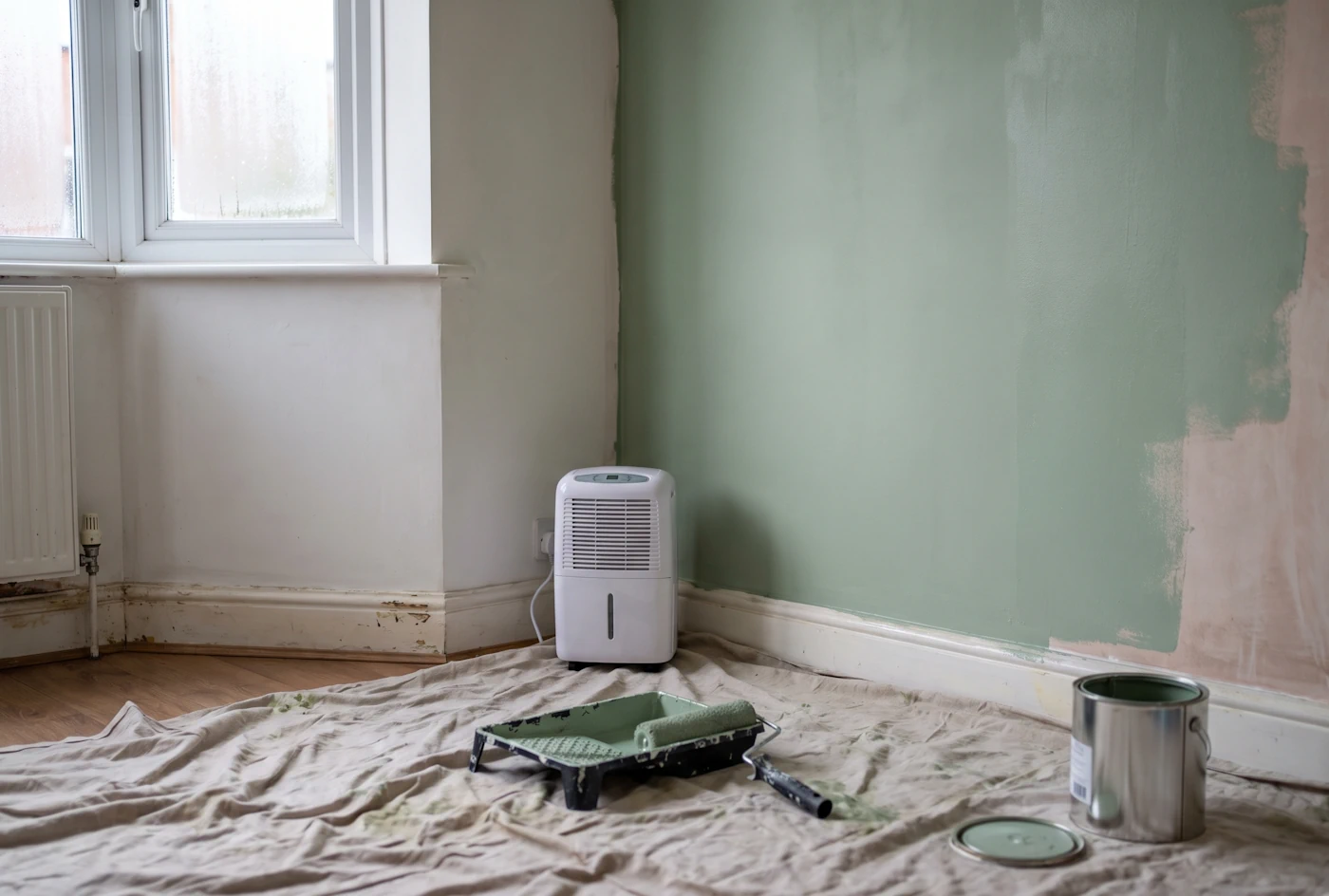
- Every window shut. Damp air needs somewhere to go. Open one slightly or run a dehumidifier.
- Thick coats. The surface skins over while the layer underneath stays soft.
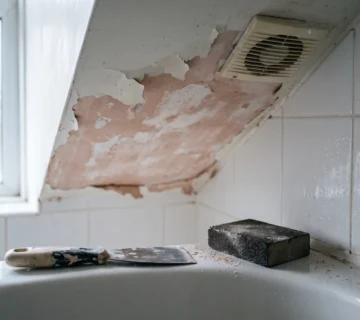
- Damp surfaces. New plaster, walls with condensation and exterior masonry after rain all hold water that the paint then covers over.
How to speed up drying without rushing
Warm the room for a day before you open the tin, and keep it warm until the final coat has cured. Start painting in the morning so each coat gets the warmest hours of the day.
Apply two thin coats rather than one heavy one. Wait the full recoat time between them. Recoating too early drags the first coat and can cause peeling later.
Where a decorator saves time
Winter repaints go wrong when rooms are cold and coats are rushed. At Mi Decor, we plan jobs around drying time, check walls for damp before the first coat and leave the gap the tin asks for, even if that adds a day.
If your walls stay tacky, flake or show patches after a repaint, we can tell you whether the cause is drying conditions or damp in the wall.
Questions homeowners ask
Is it safe to paint in winter?
Yes, if the room stays above the minimum temperature on the tin and the walls are dry. Aim for 10°C or more.
How can I tell if a coat is ready for the next one?
Wait the time on the tin, then press a fingertip lightly on a hidden spot. If it feels tacky or leaves a mark, give it longer.
Can I use a hairdryer to speed it up?
No. Fast heat dries the surface first and traps wet paint underneath, which leads to blisters and cracks.
Can I paint outside in winter?
Only on dry days when the temperature stays above the minimum on the tin, with walls free of damp. In the UK, that rules out many mornings between November and February.
So, why is my paint taking so long to dry in winter?
Cold and damp air slow evaporation, and the fix is a warm, ventilated room, thin coats and patience between them. If you would rather not wait out the weather yourself, Mi Decor can plan the repaint for you.