Will my insurance cover redecoration after water damage?
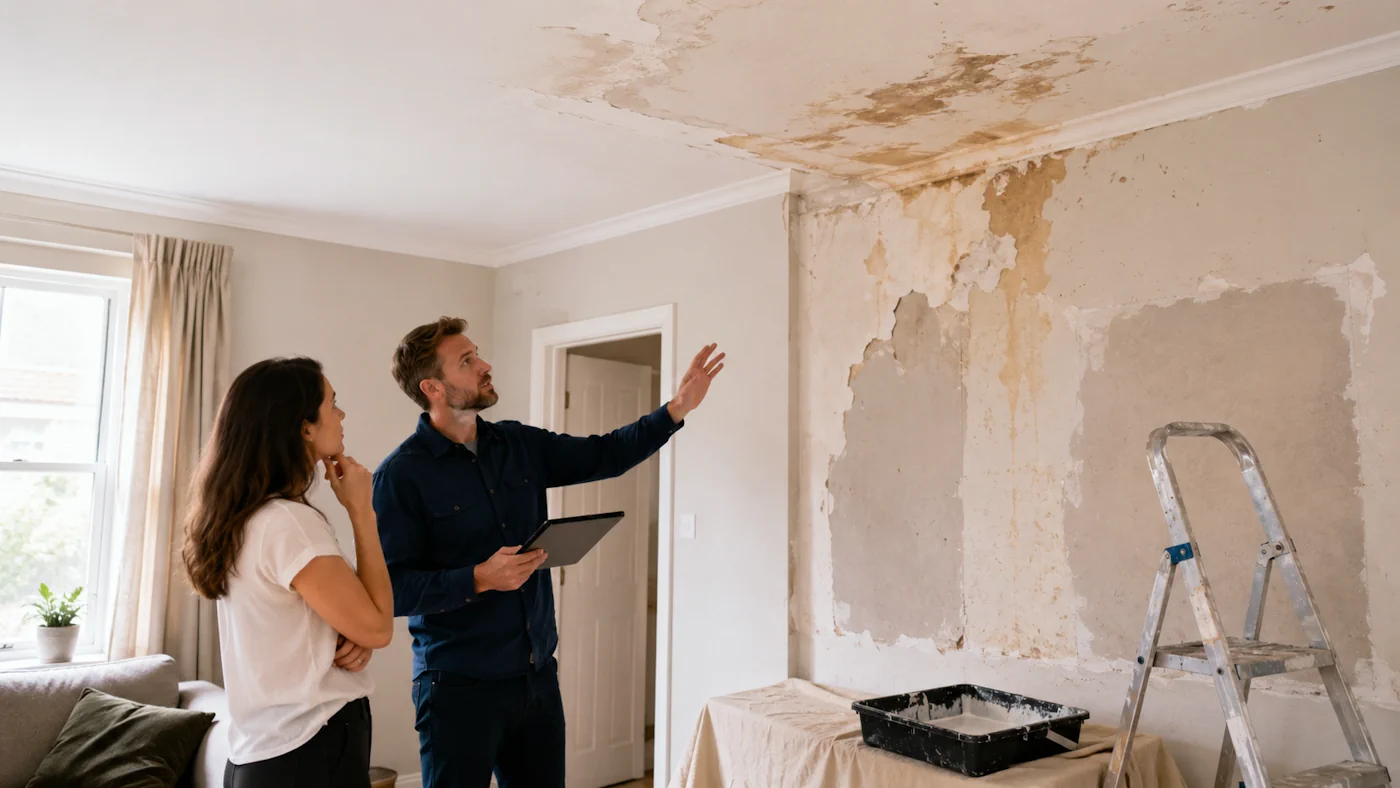
Short answer: usually, yes. Most UK home insurance policies pay to restore your walls, ceilings and woodwork to their condition before the leak. That covers repainting, fresh wallpaper, plaster repairs, stain blocking and labour for a proper decorator. The catch sits in the detail of your policy, the cause of the damage, and how quickly you act.
What your buildings policy actually pays for
Building insurance covers the fabric of your home. A burst pipe in the loft that wrecks the ceiling below falls squarely into this. Plaster repairs, redecoration of the affected area, and any structural drying all sit under the building’s cover.
Contents insurance covers your belongings: sofas, rugs, curtains, and electronics. Most UK insurers sell the two together as a combined policy. A few homeowners still hold them separately, and a gap between the two can leave you out of pocket on a big claim. Worth a five-minute check tonight.
Redecoration sits firmly with buildings. That means new paint, wallpaper, primer, sealing of stained ceilings, woodwork touch-ups, and the decorator’s time to do the job properly.
The sudden and unforeseen rule
Insurers pay out when damage happens suddenly. A pipe that bursts in a cold snap qualifies. A storm that lifts a tile and forces rain into the bedroom qualifies. A slow shower drip that you noticed eighteen months ago and never fixed will not.
Loss adjusters dig hard into the cause. If a leak built up gradually and you knew about it, the claim can collapse completely. Speed matters. Ring your insurer the day you spot the damage. Photograph everything before it dries out. Keep wet samples if you can.
Common exclusions that catch people out
Wear and tear is the biggest. Insurers will not pay for old paint peeling in a room that has not been touched since the late nineties, even if water made it look worse. Most policies also exclude gradual damp, rising damp and condensation. Any damage rooted in poor maintenance, like an unrepaired chimney or a knackered seal around the shower tray, goes the same way.
Many policies cap trace and access cover. It is the cost of finding the leak in the first place. Lifting floors, chasing through walls and pulling cupboards apart can eat through your limit before anyone opens a tin of paint. Then your excess comes off the top. A £350 excess on a £900 decoration job changes the maths quickly.
Matching paint, wallpaper and finishes
Insurers reinstate like-for-like. A wall finished in Farrow and Ball gets put back with the same grade of paint, not budget trade emulsion. The argument starts when only one wall in a four-walled room takes the hit. Some policies pay for that single wall. This leaves you with three faded walls and one bright new one. Others carry matching pairs and sets of covers. It pays to repaint the whole room so it looks right. Worth checking the wording before you ever need it.
Bespoke wallpaper, hand-finished plaster, lime-washed walls and feature ceilings usually need a specialist. Most insurers accept a written quote from a proper tradesperson, especially when the quote explains why that level of finish is needed.
Why your own decorator usually beats the insurer’s contractor
Many insurers push their preferred contractor. It is quick. The finish can be average, the materials basic, and the schedule built around the contractor’s diary rather than yours. UK policies almost always let you appoint your own decorator and submit the invoice, provided the price is fair. You pick the colours, you pick the standard, and you keep control of the timing.
Hiring the right decorator for an insurance job
A decorator who has handled claims before makes the whole process far smoother. Look for someone who writes a clear itemised quote, photographs the work at every stage, and finishes to a high standard. If you need a painter and decorator who specialises in redecoration after water damage in your area, choose a company that can liaise with your loss adjuster and provide the paperwork your insurer asks for. The right tradesperson will save you time.
How to give yourself the best shot at a full payout
Document everything from the moment you spot the damage. Photograph from several angles. Note the date, the cause if you know it, and who you contacted first. Get two written quotes from qualified decorators. Hold off on any work, even tidying up, until your insurer gives the green light or until you have full photographic evidence on file.
If the insurer pushes back, ask for the decision in writing and point to the clause in your policy that backs your claim. The Financial Ombudsman Service handles disputes for free and rules in favour of policyholders more often than most people assume.
The bottom line
Redecoration after water damage is one of the most common items on a home insurance claim, and one of the easier parts to settle. Move fast, document properly, read your policy carefully, and pick a decorator who knows what insurers expect. If done right, you end up with a room that looks better than it did before the pipe gave up.