Do You Need to Power Wash Before Painting Outside?
The Short Answer: Yes, If You Want the Paint to last.
If you plan to paint the exterior of your home, you must start with a clean surface. Dirt, mould, chalky residue, loose paint and pollution build up over time. Paint will not bond properly to a surface that is contaminated. It may blister, peel, or fail within a year.
Power washing removes what scraping and brushing cannot. It prepares the surface so the new coating grips tightly and cures evenly. Without cleaning, even premium exterior paint will struggle.
Why Exterior Surfaces Become Contaminated
Exterior walls face constant exposure. Rain carries grime. Wind drives dust into cracks. Sunlight breaks down old paint, leaving behind a fine powder known as chalking. In shaded areas, algae and mildew spread quickly. Brick and render absorb airborne pollutants.
Timber cladding holds moisture. Masonry traps salts. Previously painted surfaces develop weak spots where moisture creeps behind the coating. You cannot simply paint over these issues. You must remove them first.
What Happens If You Skip Power Washing
Painting over dirt locks contamination beneath the new layer. The paint cannot bond directly with the substrate. Instead, it sticks to dust. That weak bond fails under temperature changes.
You may notice:
- Early peeling
- Bubbling or blistering
- Uneven sheen
- Patchy coverage
- Premature cracking
These problems cost time and money. A few hours of preparation prevent years of frustration.
When Power Washing Is Essential
Power washing becomes critical in the following situations:
1. When Repainting Older Homes
Homes older than ten years often show chalking and mildew. You may not see it clearly, but if you run your hand across the surface and find powder on your fingers, washing is necessary.
2. Before Painting Masonry or Render
Brick, stone and render trap dirt deep within pores. A high-pressure wash clears those pores. The primer penetrates correctly.
3. After Harsh Weather
Storms drive grime into crevices. Salt from coastal air leaves deposits that interfere with adhesion. Cleaning removes those residues.
4. When Painting Over Flaking Paint
Power washing strips loose material quickly. You still need to scrape stubborn sections, but washing speeds the process.
When You May Not Need Full Power Washing
Not every project demands aggressive pressure. Recently built properties in clean environments may only need a gentle wash with a hose and mild detergent.
New timber, fresh render or surfaces previously cleaned within the last year may require light preparation. However, you must inspect carefully. If you see mould, grime or chalking, use proper pressure washing.
How to Power Wash Correctly
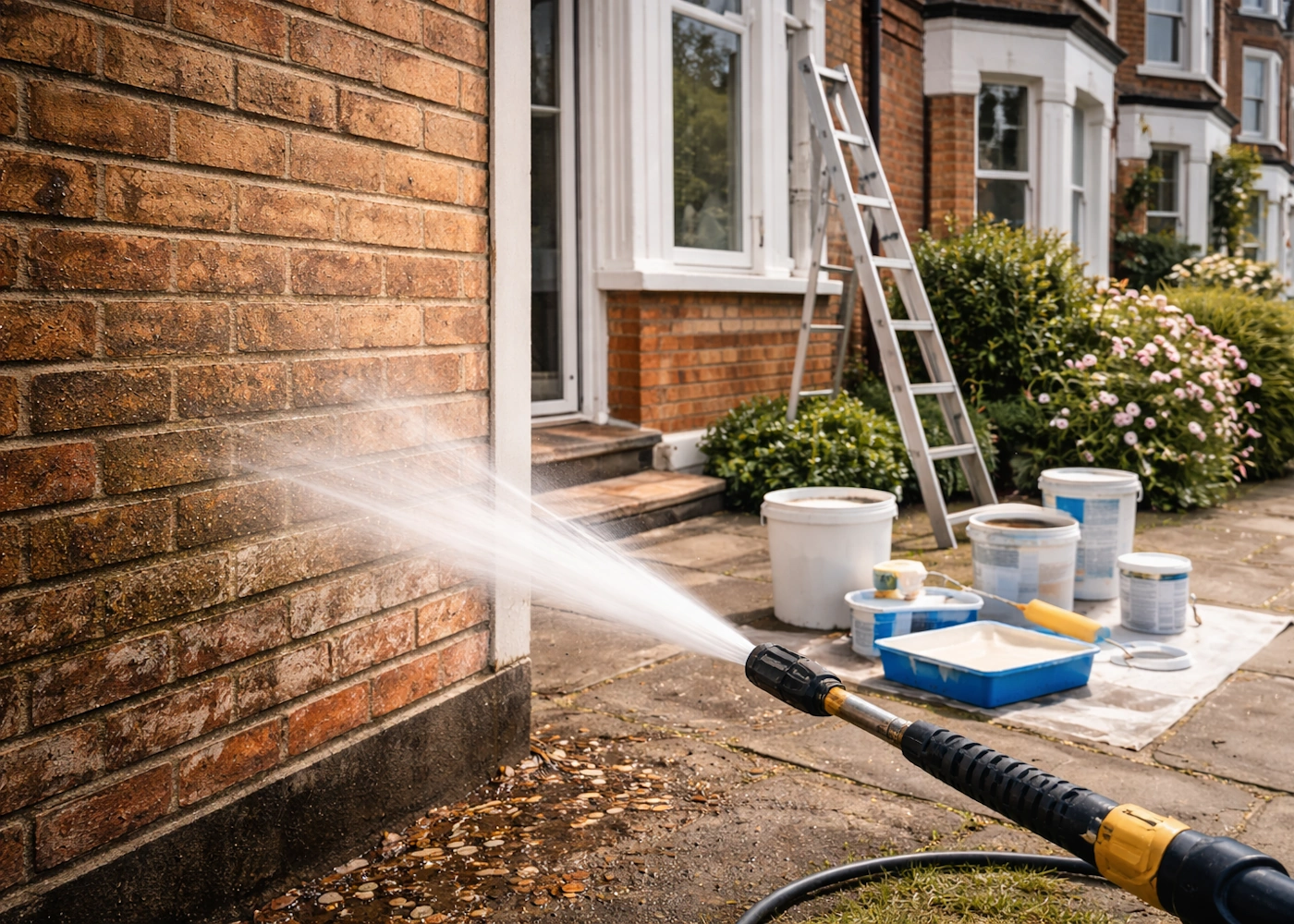
Technique matters. Incorrect washing damages surfaces. Excess pressure can gouge timber, loosen mortar or force water behind cladding.
Follow these principles:
- Use moderate pressure, not maximum force.
- Keep the nozzle at least 30–45 cm from the surface.
- Work from top to bottom
- Use a sweeping motion.
- Allow full drying time before painting.
Drying time proves crucial. Masonry and timber must dry thoroughly. Trapped moisture leads to blistering. Wait at least 24–48 hours in dry weather. Longer in damp conditions.
Special Considerations for Different Materials
Timber Cladding
Timber needs careful handling. Too much pressure causes splintering. Use low pressure and consider a cleaning solution designed for wood. Remove mould completely before priming.
Brick and Stone
These surfaces tolerate higher pressure. Focus on mortar joints. Remove moss and salts. Inspect for cracks once dry.
Render
Render can crack if hit too hard. Use consistent pressure. Clean gently around edges and corners.
uPVC and Metal Surfaces
You may not need heavy pressure. Degreasing detergent and rinsing often suffice. Ensure all residue washes away before applying specialist paint.
Do Professionals Always Power Wash?
Most professional decorators clean thoroughly before painting. They know surface preparation dictates durability. They assess the condition first. If contamination exists, they wash.
Rushed preparation leads to call-backs. Skilled tradespeople avoid that risk.
Alternatives to Power Washing
In certain cases, you can scrub manually with a stiff brush and cleaning solution. This works on small areas. It demands more labour. It rarely matches the consistency of mechanical washing.
Chemical cleaners treat mildew effectively. However, you must rinse them off completely. Residue interferes with adhesion.
For large exterior walls, power washing remains the most efficient option.
Final Verdict
If you want a smooth, durable and professional exterior finish, you must prepare properly. Power washing removes contaminants, improves adhesion and extends the life of your paintwork. Skipping this step compromises the entire project.
Exterior painting does not fail because of poor paint. It fails because of poor preparation. Clean first. Let the surface dry. Then, prime the surface where required. Then apply your topcoat with confidence.
A few hours spent washing protects your investment for years.